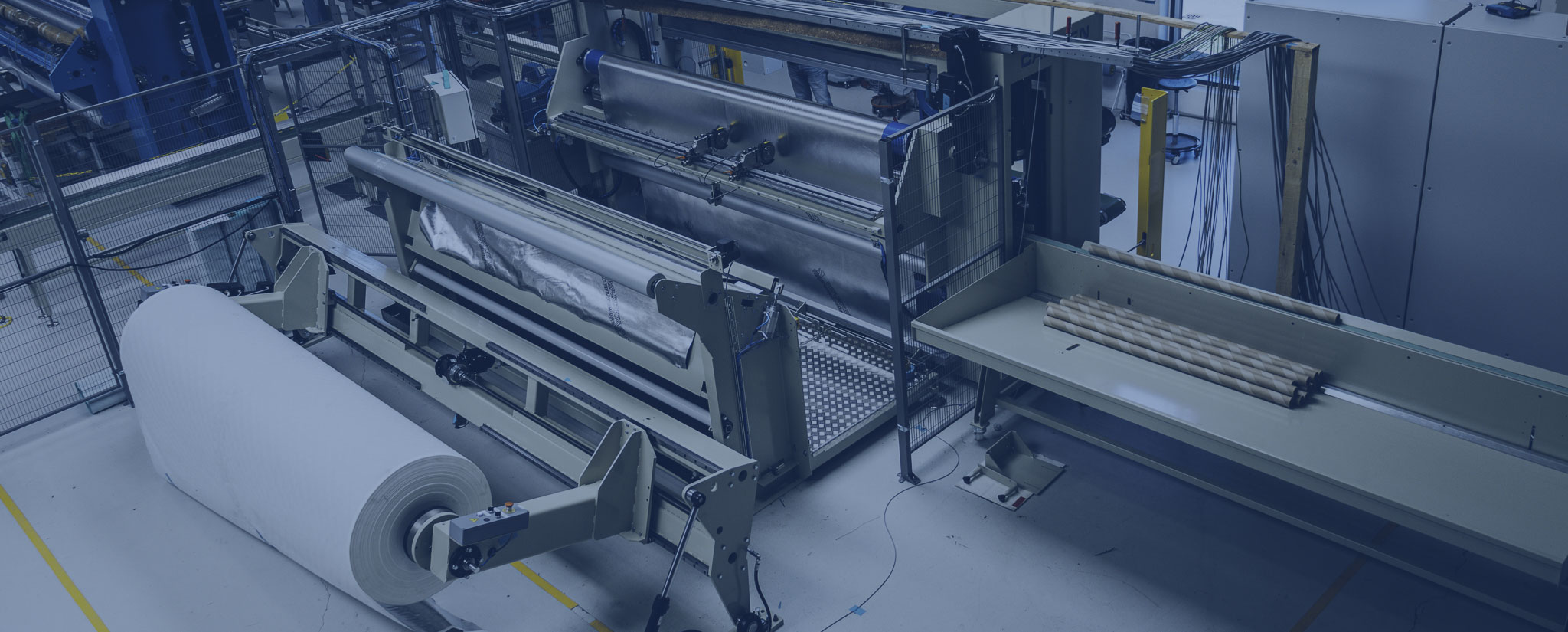
Sustainable packaging technology helps manufacturers reduce plastic use, water demand and carbon impact. CAMPEN supplies airlaid equipment for producing dry fibre-based material that can be further processed into trays, inserts, pads and other packaging components.. We combine airlaid process knowledge with robust machinery for stable industrial production.
The result is a flexible platform for cellulose fibre packaging and plastic-free packaging concepts. You can test fibre blends, control basis weight and scale production with a clear process route. We support projects from early trials to installed lines on your production floor.
Airlaid technology is a dry forming process with little or no process water in forming. It creates a flat and uniform fibre web for downstream pressing, cutting or thermoforming. The final equipment then converts the web into the required packaging component.
This process suits fibre-based packaging technology where material control is critical. You can blend virgin pulp, recycled fibre and functional fibres. This helps you target stiffness, absorption, cushioning and surface properties.
CAMPEN designs and supplies complete airlaid lines for packaging production technology. The scope can include fibre preparation, web formation, bonding and finishing. Our machinery is reliable, robust and easy to operate.
Line modules can include fibre opening, dosing, forming heads and binder application. They can also include consolidation, calendering, slitting, winding or stacking. We design integration points for downstream presses, cutters and thermoformers.
Since the 1970s, CAMPEN has supplied web-forming and converting machinery to nonwovens producers. This experience supports our packaging-focused airlaid technology and long-term service. We assist with spare parts, inspections, upgrades and process adjustments.
Your team may compare sustainable packaging technology with paperboard, plastics or wet-formed moulded fibre. CAMPEN helps you make an evidence-based decision before you invest. Our engineers work with your R&D and production teams to define measurable targets.
We then plan trials, assess runnability and review forming performance. This gives you a clearer view of process risks, material options and operating costs. It also supports predictable scale-up from pilot work to full production.
We focus on stable quality, safe operation and cost control. The aim is a reliable airlaid production line that performs from start-up and adapts as material requirements change.
Airlaid-based materials can support pads, inserts, trays, lids and carrier elements. The dry-formed web gives you a consistent base for pressing or thermoforming. You can add coatings or barriers downstream when applications need moisture resistance.
Manufacturers use dry fibre technology to reduce plastic content or replace laminates. It can also help when wet-formed fibre needs too much water, space or drying capacity. Typical benefits include stable caliper, controlled cushioning and fewer steps before forming.
Considering in-house airlaid production? Talk to CAMPEN about airlaid technology, pilot testing and line configuration before you invest. Learn more about CAMPEN’s airlaid solutions or explore our airlaid test center.

Jens Erik Thordahl
Senior Airlaid Specialist